

Quiet Winter Shores: Your Winter Guide to Croatia’s Hidden Coastal Beauty
Why Winter Suits the Adriatic Coast
Shorter days encourage slower travel, which fits the coastline’s pace. Historic old towns feel intimate, letting you notice Roman reliefs, Renaissance portals, and quiet chapels that summer often hides. Prices are friendlier, reservations are easier, and the mood is more conversational—café windows fog, konobas serve stews and grilled fish, and fishermen talk about the morning catch. Christmas markets brighten squares from late November through the New Year, while winter weather on the coast is generally milder than inland areas, though bursts of bura wind keep the air crystalline.
Where to Go: The Quiet Stars of the Coast
Dubrovnik Old Town and the Winter City Walls
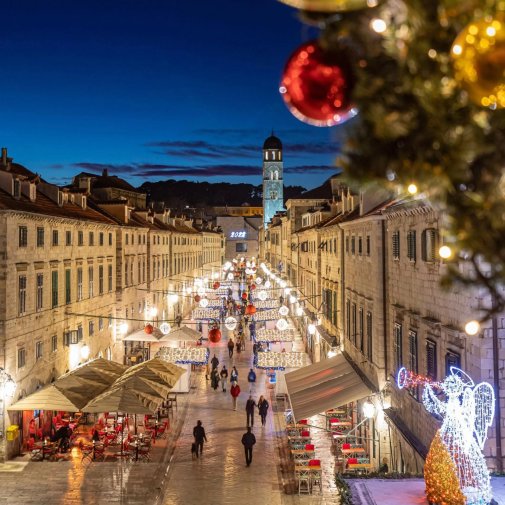
Walk Stradun when marble stones reflect the sky in Dubrovnik, then step onto the walls for sea-and-red-roof panoramas free of summer lines. The city’s Christmas market animates Gundulić Square with mulled wine, candied orange peel, and carols. On clear days, take the cable car for island views; on windy ones, tuck into a konoba near Pile Gate for octopus salad and black risotto.
Split and Easy Island Escapes
In Split, the old town folds into Diocletian’s Palace, where Roman masonry frames everyday life. In winter, the Peristyle of Diocletian’s Palace is almost meditative, Marjan Hill offers pine-scented trails, and the waterfront Riva hums gently. From the city, fast catamarans connect nearby island destinations on streamlined winter timetables, opening up day trips for a balanced city-and-coast experience. Tickets for these routes can be conveniently purchased online through the TP Line ticket sales webshop.
Zadar and the Northern Coast Islands
Zadar’s Sea Organ and Greeting to the Sun are moodier in the off-season, especially at sunset when wave-made music is the soundtrack to an uncrowded promenade. The old town’s Roman forum and stone streets pair well with hot chocolate or rakija. When weather permits, ferry journeys toward must-see islands like Dugi Otok and Silba reveal serene shorelines, lighthouses, and hidden coves.
Korčula and the Calm of Mljet National Park
Korčula town’s checkerboard streets shelter from the wind, and its small museums reward lingering. Nearby, Mljet National Park slows everything to the rhythm of salt lakes and evergreen forest. Winter months bring reflective light to the monastery isle of St. Mary; wrap up, follow lakeside paths, and watch cormorants skim the surface.
Lastovo – A Remote Winter Escape
For travelers seeking true isolation, Lastovo offers one of the Adriatic’s most untouched winter landscapes. Its star-filled skies, dark-sky park status, and deep silence make it a rare destination for slow, reflective travel far from crowds.
Christmas Markets and New Year by the Sea
Across the coast, city squares turn festive with wooden chalets, local pastries, and brass bands. Look for fritule dusted with sugar, Dalmatian prosciutto, and artisan olive oils. Dubrovnik, Split, and Zadar each stage concerts and light displays, while smaller towns host intimate programs that feel community-run. New Year on the waterfront often includes open-air music, fireworks, and a warm cup in hand, without the crush.
Planning Basics: Winter Weather, Timing and What to Pack
Coastal winter weather ranges from cool sunshine to brisk, windy spells. Expect average daytime temperatures that call for layers rather than heavy alpine gear. Pack a windproof jacket, comfortable walking shoes with grip, a warm mid-layer, and a compact umbrella. Museums occasionally adjust hours by month, and some restaurants take seasonal breaks, but you’ll still find plenty of open cafés and family-run spots, especially in larger city destinations.
Getting Around the Coast in the Off-Season
Ferries and fast catamarans such as TP Line services continue to knit together major towns and islands during winter, typically on reduced yet reliable schedules. Tickets can be purchased hassle-free through the TP Line ticket sales webshop, allowing travelers to explore Croatia with ease. Stay updated on timetable changes and route availability, and allow a little buffer time around windy days. If you're considering ferry travel around Croatia in winter, this is an ideal solution for connecting key locations.
A Slow Winter Trip Idea
- Day 1: Arrive in Split, explore Diocletian’s Palace, climb Marjan Hill before dusk, then warm up with seafood in a stone-arched konoba.
- Day 2: Morning catamaran to Korčula or Mljet for a coastal walk and a peaceful afternoon surrounded by nature’s tranquility; return to the city for an evening stroll along the Riva.
- Day 3: Travel south to Dubrovnik, loop the city walls, browse the Christmas market, and catch sunset from a quiet bastion.
Taste and Tradition Along the Coast
Winter menus lean hearty and local: pašticada with gnocchi, brodetto stews, grilled calamari, wild greens sautéed with olive oil, citrus-forward cakes. Olive harvest season leaves fresh oils in shops, and island wineries pour robust reds and crisp whites. Markets are smaller now but more sociable; ask producers about varieties, and they’ll often share a story with the sample.
Nature, Light and Time to Notice
The season’s best gift is space to look. Pinpricks of light on evening harbors, church bells over empty lanes, gulls tracing the shoreline, and a horizon that seems closer in the colder air. Give yourself time between sights, choose one town as a base, add an island excursion, and let the winter Adriatic coast shape the experience rather than a checklist.
Begin your serene journey along the Adriatic with TP Line’s fast, comfortable catamarans. Book your ferry tickets and unlock the beauty of Croatia’s coast and islands this winter, embracing slow travel with ease.