

Why catamaran travel suits multi-stop Croatia holidays
Island hopping fits the geography of Croatia
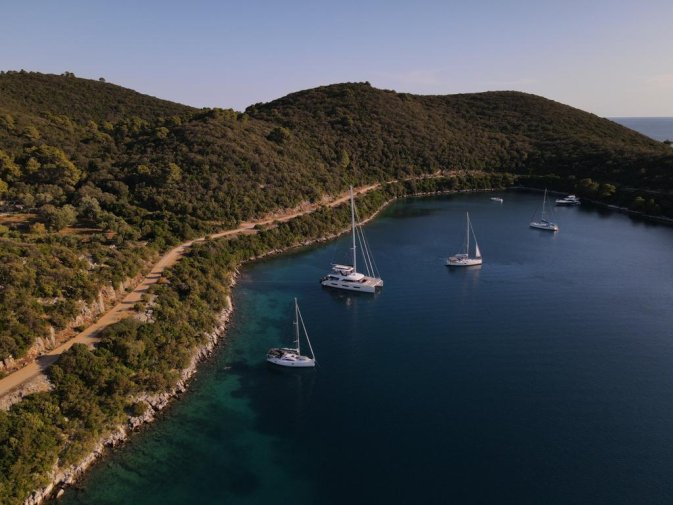
The shape of the Croatian coast naturally encourages island hopping. Many of the country’s most memorable places are spread across the mainland and nearby islands, often within a manageable travel window by fast ferry or catamaran. Travelers do not need to choose only one base and stay there for a week. They can move from Split to Hvar, continue to Korčula, spend a day near Mljet, and finish in Dubrovnik without the trip feeling fragmented.
This matters because a Croatian holiday is rarely about a single highlight. One traveler may want lively waterfront evenings, another may be searching for quiet coves, and someone else may be planning visits to a national park, local restaurant, and cultural landmarks in the same itinerary. A catamaran makes this variety realistic.
A fast coastal route also helps reduce the sense of distance. Places that appear scattered on a map often feel surprisingly connected once the sea becomes the main travel corridor.
More destinations, less wasted time
One of the biggest advantages of catamaran travel is efficiency. On a multi-stop trip, transport can either open the itinerary or limit it. When transfers take too long, travelers tend to cut destinations, cancel day plans, or spend too much energy coordinating each leg. Fast maritime connections make it easier to protect the most valuable resource on holiday: time.
That is especially important in Croatia, where many visitors want to combine famous stops with less crowded locations. A traveler might start in Split, enjoy a few hours around Diocletian’s Palace, then continue toward a Croatian island instead of losing a full day to overland movement. Others may arrive in Dubrovnik and prefer to keep exploring the southern Adriatic rather than staying in one place throughout the trip.
Because catamarans are designed for passenger transport and speed, they suit shorter stays as well. If the plan includes two nights in one town, one night in another, and a full day trip elsewhere, travel remains manageable rather than tiring.
Coastal arrivals feel part of the holiday
How you arrive shapes how a destination feels. Reaching an island by sea creates a much stronger sense of place than arriving after a complicated sequence of roads, ports, and waiting areas. The approach reveals stone settlements, harbors, pine-covered slopes, and open water in a way that immediately connects travelers to the Adriatic atmosphere.
This is particularly true for destinations such as Hvar Town, where the waterfront arrival sets the tone before the visit has even begun. The same applies to places like Mljet, where nature is a central part of the appeal, or Vis, where the pace and setting reward travelers looking for something calmer and more spatially open than busier hubs.
For many visitors, the transfer itself becomes memorable rather than purely functional. That matters on a holiday built around several stops, because repeated travel legs should still feel enjoyable by the third or fourth hour of the journey.
Better flexibility for mixed travel styles
Not every traveler defines a perfect Croatia trip in the same way. Some want culture and architecture. Others prioritize swimming, scenic promenades, seafood, and long lunches near the sea. Many want all of it in one itinerary. Catamaran travel supports that flexibility well because it allows different types of destinations to be combined without overcomplicating the plan.
A couple might divide their week between a historic city, a nightlife-oriented island, and a quieter nature stop. A family may prefer a balance of walkable ports, short transfer time, and easy access to a beach. Friends planning an island hop often want the freedom to enjoy one location fully and then move on while the trip still feels fresh.
This travel style also suits people who do not want to rent a car. In Croatia, many of the most attractive places for short stays are naturally pedestrian-friendly once you arrive. Waterfront areas, central promenades, heritage districts, and local dining spots are often within easy reach from the port.
Ideal for combining iconic stops with quieter islands
Croatia is famous for headline destinations, but the full experience usually comes from pairing those well-known places with slower, less crowded ones. A holiday can begin in Dubrovnik, continue through Hvar, and then become more relaxed on Mljet or Vis. That contrast is where much of the destination’s charm lies.
A fast ferry network helps travelers build that contrast naturally. You can spend one day exploring a polished harbor with stylish bars and busy terraces, then wake up the next morning on an island where the focus shifts to forests, coves, and a different pace of life. You are not choosing between culture and scenery, or energy and calm. You are arranging them in the order that suits your trip.
For travelers who want to see more of the Adriatic without turning the holiday into a logistics exercise, catamaran travel makes Croatia island hopping feel smooth, coherent, and rewarding. It matches the geography, protects holiday time, and connects places like Split, Hvar, Mljet, Vis, and Dubrovnik in a way that keeps the journey as appealing as the destinations themselves.